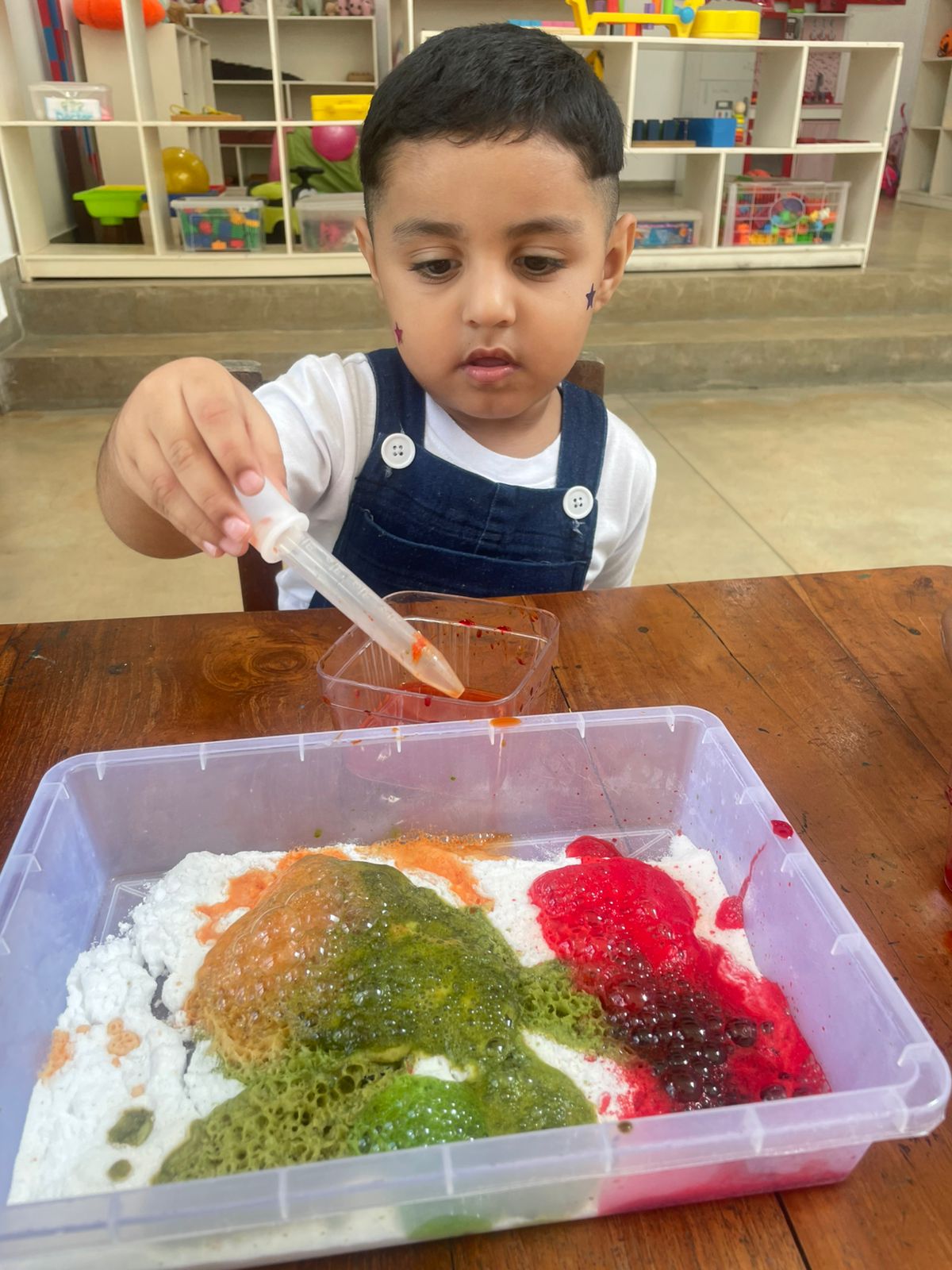
Many parents believe that science learning needs special kits, expensive toys or formal lessons. In reality, science is already happening in your home every day. Your preschooler is learning science, technology, engineering and mathematics (STEM) through simple play activities such as pouring water, building with blocks and helping in the kitchen. For a preschooler, STEM is not about memorising facts. It is about exploring, observing and asking questions. Everyday routines provide powerful opportunities to develop early STEM skills when parents recognise them as learning moments.
What STEM learning looks like for a preschooler
STEM learning in early childhood is based on curiosity and play. A preschooler naturally learns by touching, testing and repeating actions. When children ask “why” or “what will happen,” they are practising scientific thinking.
Early STEM learning includes:
- observing changes
- making simple predictions
- noticing patterns
- solving small problems
- experimenting through play
These skills form the foundation for later learning in science, mathematics, technology and engineering.
Take Bath Time For Example
During bath time, a preschooler may pour water, squeeze sponges and drop toys into the tub. This simple activity has introduced several STEM concepts such as
- Physics: floating and sinking
- Mathematics: full and empty, more and less
- Engineering: how containers hold water
- Scientific thinking: testing what happens when objects are dropped
Parents can support STEM learning by asking simple questions such as, “What do you think will happen if we put this toy in the water?”
Parents’ role in STEM learning
You might have understood by now that parents do not need to teach formal lessons. Your main role is to talk, listen and encourage curiosity. Simple questions like “What do you notice?”, “What do you think will happen next?”, “Why do you think that happened?” or “What can we try now?”.
This supports language development, confidence and scientific reasoning in a preschooler. STEM learning through play benefits all children, especially those who learn best through movement and hands-on experience.
For many preschoolers, play-based STEM learning feels safe, meaningful and enjoyable. It helps children build confidence, develop independence, enjoy learning and see science as part of everyday life. STEM becomes something they do, not something they fear. Parents do not need special equipment or perfect answers to teach STEM.
A preschooler can learn science using water, food, toys and nature. Every bubble, spill, tower and question is an opportunity for STEM learning. When families treat everyday moments as learning moments, they show children that science is everywhere and curiosity is valuable. The goal is not to raise a scientist, but to raise a preschooler who wonders, explores and thinks – and that journey begins at home.